
What About Plantains?: How to Balance Your Starches Without Giving Up Cultural Foods
Let’s talk about how to balance your starches.
Walk into any Haitian kitchen on a Saturday morning, and you are bound to hear the gentle rumble of a pot boiling on the stove. Inside, you’ll often find ground provisions (viveres) like malanga, yanm, and patat alongside vibrant green or golden bannann (plantains). For generations, these whole, unrefined foods have nourished our families, fueling long workdays, family gatherings, and everyday life.
Yet, many people walk into a nutrition clinic feeling a heavy sense of guilt about these exact foods. Standard Western diet advice frequently groups all carbohydrates into one generic “bad carb” bucket, telling us to cut out white-fleshed starches or eliminate plantains entirely to manage weight or blood sugar.
It is time to rewrite that narrative.

Our traditional starchy staples are not empty carbs. They are whole, unrefined, nutrient-dense foods packed with essential minerals, protective antioxidants, and unique fibers. When we understand how our bodies use carbohydrates for energy, we can enjoy our cultural foods with confidence, balance, and zero guilt.
Carbohydrates Are Fuel: Matching Input to Activity
Carbohydrates are the body’s primary and preferred energy source. Your brain, central nervous system, and muscles rely on a steady supply of glucose to function at their best. Carbohydrates are not something you need to fear or “earn”. They are functional fuel for life.
How your body processes carbohydrates depends heavily on your daily movement:
- For Active Days and Movement: If you exercise, work a physically demanding job, chase young children, or log high daily step counts, complex carbohydrates are your best friend. They replenish muscle glycogen, prevent physical and mental fatigue, and accelerate recovery. The complex carbs found in plantains and root tubers provide sustained stamina that refined, processed sugars simply cannot match.
- For Lower-Activity Days: On days spent mostly sitting at a desk or resting, your body’s immediate demand for quick energy is lower. On these days, you don’t need to eliminate traditional staples; you simply tune the portion size to match your energy output.
Understanding this connection empowers you to view food as a flexible tool rather than a rigid set of rules.
Spotlight on the Pantry: Beyond Just “Starch”
Each traditional staple in the Haitian pantry brings a unique clinical and nutritional profile to the table.
1. Bannann (Plantain): Potassium and Prebiotics for Performance
Whether served as bannann bouyi (boiled) or incorporated into a savory meal, plantains are a nutritional powerhouse.
- Green Plantains: Packed with resistant starch—a type of fiber that resists digestion in the small intestine and travels to the colon, where it feeds beneficial gut bacteria. Green plantains yield a slow, steady energy release.
- Ripe Plantains: Higher in naturally occurring sugars, making them an ideal, easily digestible source of fuel right before or after physical activity.
- Micronutrient Profile: Rich in potassium and magnesium, which support heart health, regulate blood pressure, and prevent muscle cramping.
2. Malanga: Gentle Energy for Sensitive Stomachs
Malanga occupies a special place in traditional cooking, often turned to when someone needs easy-to-digest nourishment.
- Microscopic Advantage:Malanga possesses extraordinarily small starch granules, making it far easier on the digestive tract than many other starchy crops.
- Clinical Benefit: It provides energy and it is easy to digest making it an excellent choice for individuals with sensitive stomachs, acid reflux, or gastrointestinal recovery needs, as well as active individuals looking for fuel that is less likely to feel “heavy”.
3. Yanm and Patat: Blood Pressure and Glycemic Balance
It is important to distinguish true yanm (yam) and patat (Haitian sweet potato) from processed white starches.
- Potassium Heavyweights: Both are loaded with potassium, an essential mineral that helps counter the effects of dietary sodium and supports healthy blood pressure levels.
- Fiber Matrix: Their high natural fiber content slows down digestion, helping to prevent sharp blood sugar spikes when eaten in balanced proportions.
4. Yuca (Cassava): High-Density Stamina
Yuca is one of the most energy-dense staples in the Caribbean pantry.
- Sustained Endurance: High in energy, vitamin C, copper, and manganese, yuca provides long-lasting fuel for high-demand, high-activity days.
- Resistant Starch Boost: Cooking and then cooling yuca increases its resistant starch content, which helps improve insulin sensitivity and feeds a healthy gut microbiome.
Practical Strategies: Balancing Fuel and Movement
Honoring your culture and protecting your health are not mutually exclusive. Here is how to keep ground provisions and plantains on your plate while supporting your wellness goals:
Matching Fuel To Movement
High-Activity Days
(Workouts, heavy labor, movement)
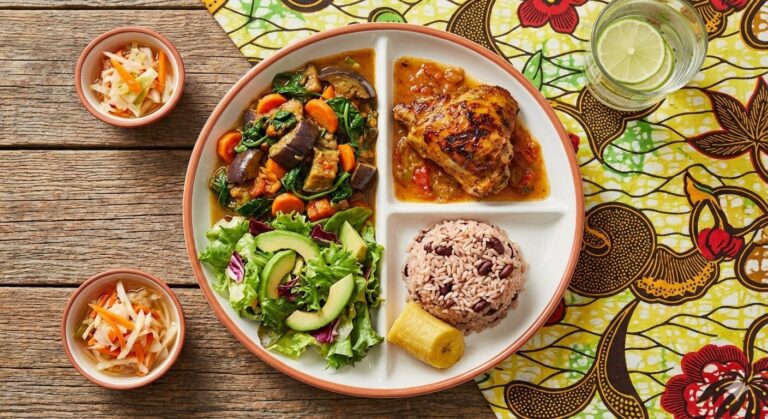
Make starchy staples 1/3 to 1/2 of your plate
Focus on glycogen replenishment
Excellent pre/post workout fuel
Rest/Low-Activity Days
(Desk work, recovery, sedentary days)
Scale starchy staples to 1/4 of your plate
Fill the remainder with non-starchy vegetables and lean protein
- Pair to Smooth the Energy Release: Never eat your starchy staples in isolation. Pair boiled yanm, malanga, or bannann with lean protein (pwason, poul, or pwa) and healthy fats (zaboka/avocado). The protein and fat further slow digestion, keeping your energy steady and your blood sugar balanced.
- Focus on Preparation: Enjoy these staples boiled, steamed, or roasted with epis, garlic, citrus, and a drizzle of olive or avocado oil. Keeping deep-frying as an occasional treat allows you to maximize the natural micronutrients without adding unnecessary heat-damaged oils.
Why Balance Your Starches? For Food as Cultural Power, Not Guilt
Our ancestors relied on these crops for stamina, resilience, and strength. They are not foods to be feared, nor are they something you must “earn” through punishing workouts.
By understanding how your body utilizes complex carbohydrates, you can honor your heritage, nourish your gut, and fuel your daily life with pride—one delicious, balanced plate at a time.
Looking for more reads? Check out the rest of my blog here.