The Caribbean Balanced Plate
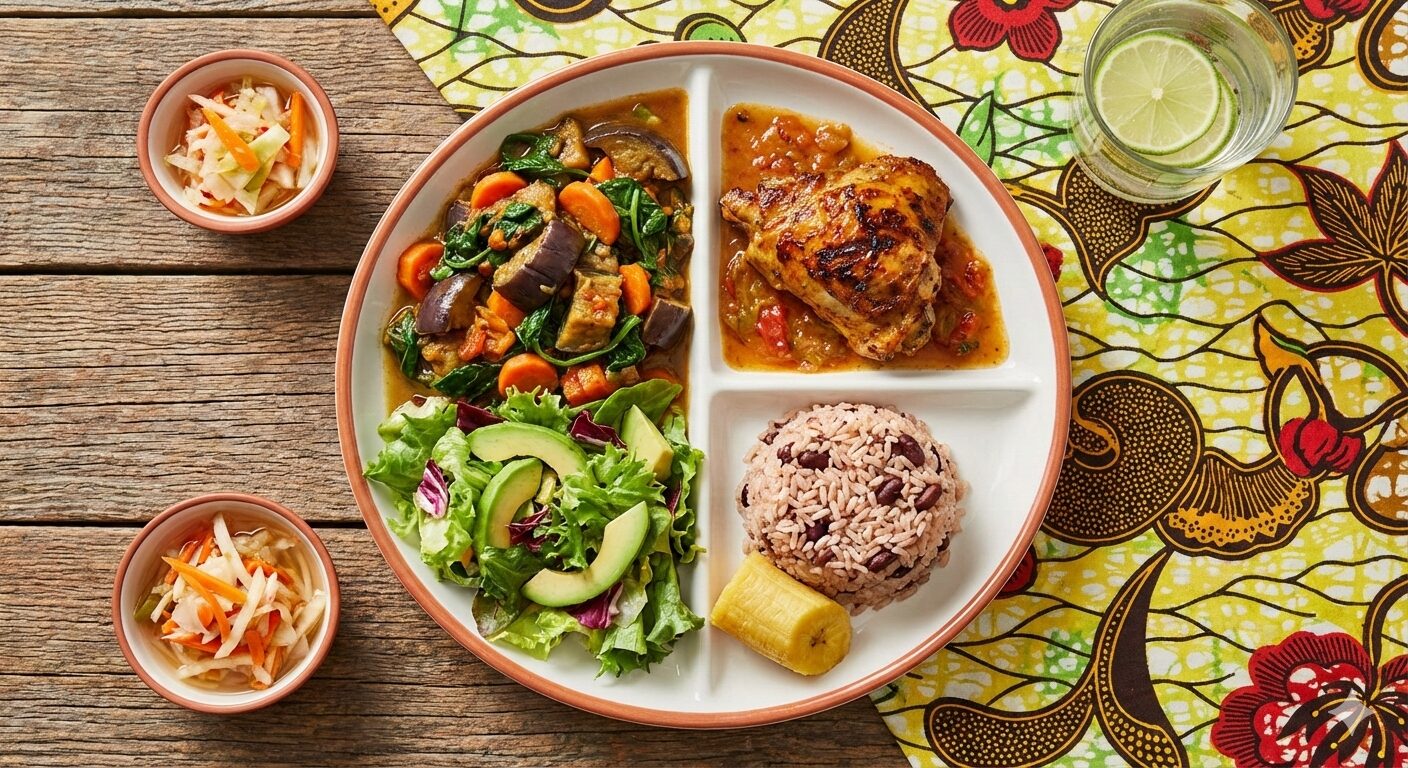
The Caribbean kitchen reflects a rich blend of flavor, history, and resilience. The Caribbean balanced plate brings these foods together in a way that supports both tradition and health.
From the smoky jerk pits of Jamaica to the aromatic stews of Trinidad, the Caribbean’s culinary identity is built on a foundation of tubers, legumes (nuts and seeds), and bold spices. In the context of Haiti, the food—manje ayisyen—is a source of profound pride, representing a fusion of African, Taino, and French influences.
However, as lifestyle patterns change and the prevalence of metabolic conditions like hypertension and type 2 diabetes rises within the Caribbean diaspora, many are looking for ways to enjoy their heritage without compromising their health. Enter the Balanced Plate Method.
The common misconception is that “healthy eating” requires abandoning traditional foods in favor of steamed broccoli and plain chicken breast. This couldn’t be further from the truth. By applying the Balanced Plate Method to our Caribbean diets, we can preserve the “soul” of the food while optimizing its nutritional impact.
Understanding the Balanced Plate Method
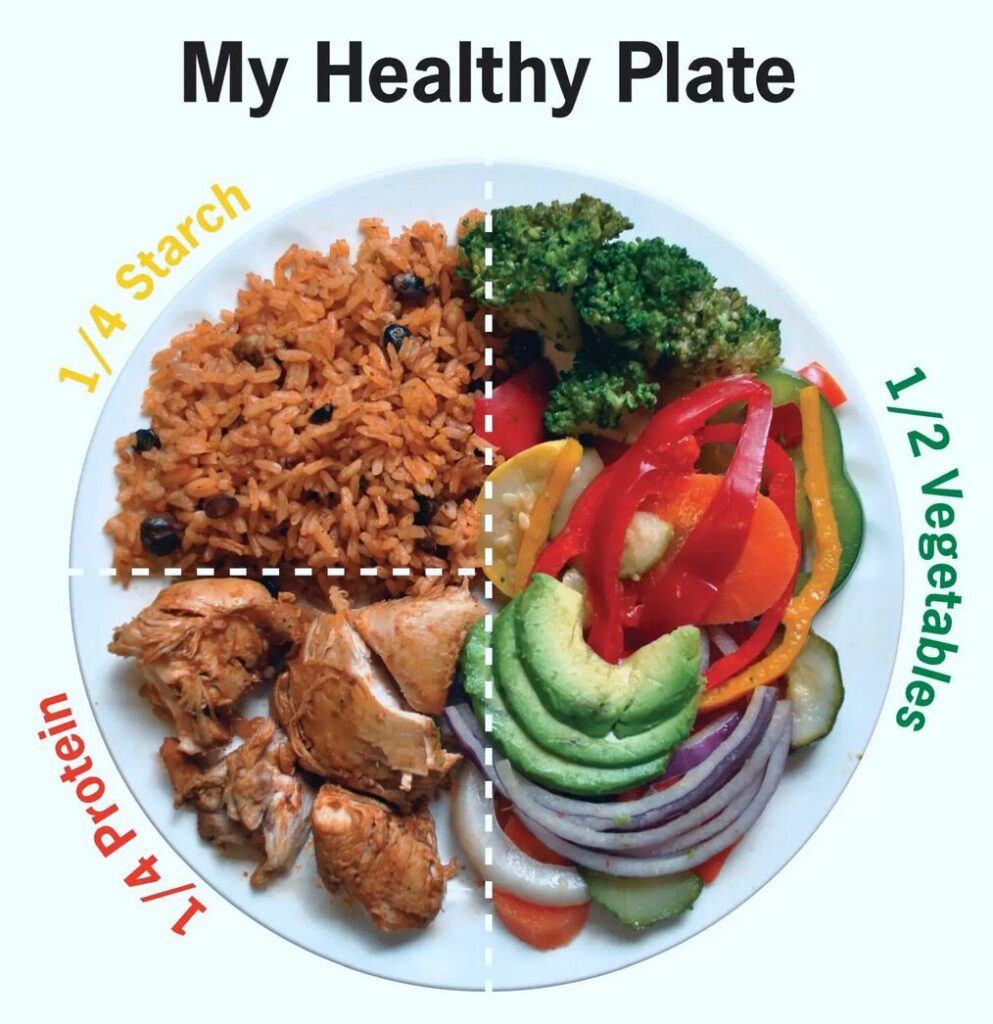
The Balanced Plate Method is a visual tool designed to simplify portion control and macronutrient balance without the need for calorie counting. The blueprint is simple:
- 50% Non-Starchy Vegetables: These provide fiber, vitamins, and volume to keep you full.
- 25% Lean Protein: Essential for muscle repair and satiety.
- 25% Complex Carbohydrates: The fuel for your brain and body.
In a traditional Caribbean setting, these ratios are often inverted. A typical plate might consist of 70% rice and beans, 20% meat, and perhaps a small garnish of lettuce or a slice of avocado. These practices have unfairly caused Caribbean food to be dubbed unhealthy when in fact, it’s the ratios a lot of people thrive on in the Caribbean.
The people in these islands tend to be very physically active, typically walking to their destinations which may include hills and mountains. That kind of strenuous activity can easily require that inversion. To fit the lifestyle of someone who doesn’t live that way (often times the diaspora), we can re-balance those ratios to meet their current needs. The goal of the balanced plate method is to shift these proportions while keeping the flavors we love.
The Haitian Context: Navigating the “Viv” and the “Diri”
In Haitian culture, food is often categorized. There is diri (rice), pwa (beans), and viv (starchy roots like yam, malanga, and plantains). Because these staples are culturally synonymous with “strength,” they tend to dominate the plate.
1. Reclaiming the Half-Plate: The Vegetable Revolution
The biggest hurdle in the Caribbean diet is the vegetable portion. In many Haitian households, vegetables are often cooked into the stew (like the cabbage in a poul ak nwa) or served as a small side of pikliz (spicy pickled slaw).
To meet the 50% vegetable goal, we have to think bigger:
- Lalo (Jute Leaves): This is a nutritional powerhouse.5 When cooked with less oil and paired with crab or lean beef, a large serving of lalo can easily fill half your plate.
- Chayote (Mirliton) and Eggplant: These are staples in legim, a thick Haitian vegetable stew. The key is to make the legim the star. Instead of a mountain of rice with a scoop of legim, try a mountain of legim with a modest scoop of rice.
- The Salad Refresh: Move beyond the “iceberg lettuce and one slice of tomato” garnish. For example, you can create a delicious watercress (kreson) salad. But, if you do desire to stick to the classic lettuce and tomatoes, consider adding more to your plate?
2. The Protein Shift: From Fried to Braised
In Haiti, griyo (fried pork) is the undisputed king of festive dishes. While delicious, the combination of fat-heavy cuts and deep-frying makes it a suboptimal choice for everyday eating.
To balance the protein quadrant:
- Poulet en Sauce: Chicken stewed in sauce is naturally leaner and incredibly flavorful.
- Poisson Gros Sel: This traditional coarse-salt fish dish is often poached with bell peppers, onions, and lime.
- Beans as Protein (especially for vegetarians): Pureed beans or whole beans are excellent plant-based proteins.
3. Managing the Carbohydrates
The 25% carbohydrate section is where the most attention is required. Caribbean carbohydrates are typically (but not limited to) plantains, malanga, patat (sweet potato), and diri ak pwa (rice and beans).
- The Power of Choice: You don’t have to choose between rice and plantains; you just have to choose a portion of each to fit into that 25% wedge.
- Grains: For example, foods like mayi moulen (cornmeal) or ble (bulgur wheat) are often served for lunch or dinner. While grains can be great complex carb options, the key is to ensure balance. Aim for them to take up no more than 25% of your plate.
Anatomy of a Haitian Balanced Plate: Examples
To see how this works in practice, let’s look at a “Before” and “After” of a common Sunday dinner.
The Traditional Sunday Plate (The “Before”)
- 60% Diri ak Pwa Wouj (Rice and red beans)
- 20% Griyo (Fried pork)
- 10% Bannann Peze (Fried plantains)
- 10% Macaroni au Gratin or a small side of Pikliz
The Observation: This plate is almost entirely carbohydrates and fats. Because of that, we would not consider it a balanced plate. Depending on the person, their physical activity, and their health, it may lead to a significant blood sugar spike and post-meal lethargy.
The Re-Balanced Haitian Plate (The “After”)
- 50% (The Non-Starchy Veggies): A generous serving of legim or a large watercress and avocado salad.
- 25% (The Protein): If you’re having a legim then any meat can be paired to be cooked in it it. If you’re not having a legim you can make a poulet en sauce or poisson gros sel. On the few instances that you’re enjoying griyo, be a little extra mindful of your portion size by eating intuitively.
- 25% (The Carb): A small mound of Diri ak Pwa (about the size of your fist) OR one boiled plantain.
The Role of “Epis”: The Secret Weapon
The beauty of Caribbean cooking is Epis—the blend of garlic, scallions, bell peppers, parsley, thyme, and scotch bonnet peppers. This seasoning base is inherently healthy. It is packed with antioxidants and anti-inflammatory compounds.
By leaning heavily on epis for flavor, you can reduce the reliance on salt and bouillon cubes (which may contribute to hypertension). When using the Balanced Plate Method, use epis on your cooked non-starchy veggies to make your 50% vegetable portion taste so good that you don’t feel like you’re “missing out” on the traditional portions.
Social and Cultural Navigation
Eating is a social act in the Caribbean. If you visit a Haitian auntie’s house and ask for “half a plate of vegetables,” she might look at you with concern, fearing you are ill or unhappy.
- The “Crowded Plate” Strategy: If someone else is serving you, ask for the vegetables first. This strategy helps you ensure you’re getting in your fiber and antioxidants.
- Focus on the “Sos”: If the rice is the vehicle for the delicious sos pwa (bean sauce), ask for more sauce and a 25% portion of rice. The sauce contains the fiber and protein of the beans.
- Hydration: Replace the ji (juices) or soda with diluted juices and infused water. Caribbean fruits are delicious, but when juiced and sweetened, they can add an additional carbohydrate load.
Conclusion: Preservation through Adaptation
The Balanced Plate Method isn’t about policing Caribbean culture; it’s about ensuring that the people who carry that culture remain healthy enough to pass it on. By shifting our focus, we honor the land and the ingredients that have sustained the Caribbean for centuries.
Haitian cuisine is already rich in the building blocks of health. We have the fiber of the beans, the lean protein of the sea and our traditional farming, and the medicinal power of our spices. By simply rearranging the geometry of our plates, we can enjoy the tastes of home while fueling a long and vibrant life.